

Blogs
East Indian Chicken Khudi Recipe You Can Make at Home
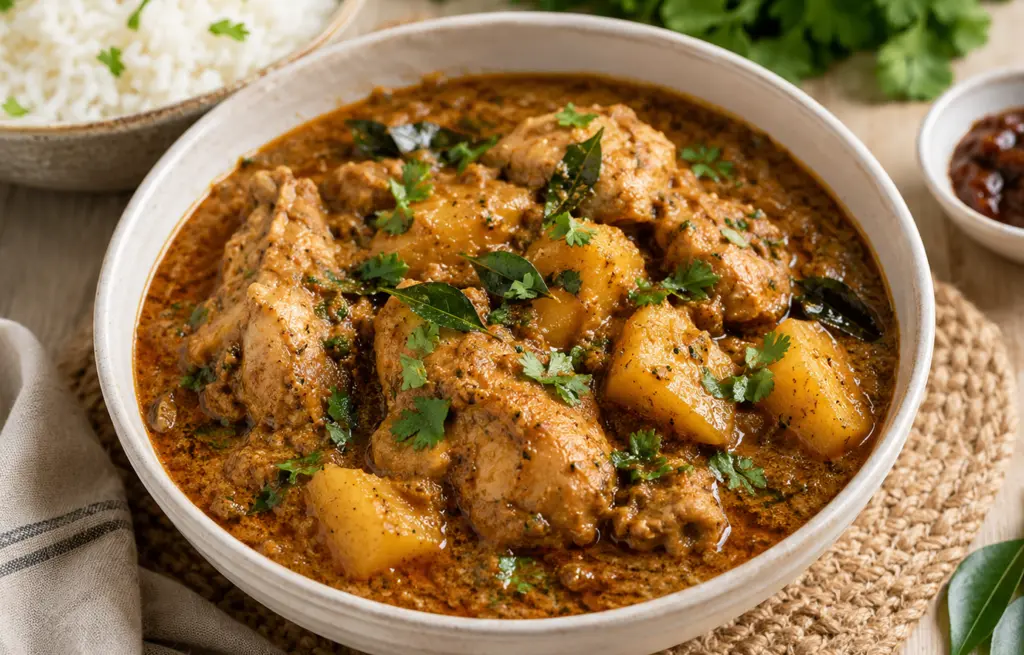
Chicken Khudi is one of the most cherished dishes from the East Indian community of Mumbai. The East Indians are one of Mumbai’s oldest Catholic communities and their cuisine is deeply rooted in the coastal traditions of the Konkan region. Khudi is their version of a coconut-based chicken curry where roasted grated coconut and onions form the base of the masala, and the defining spice is the East Indian Bottle Masala — a complex blend of over twenty dried and roasted spices that is unique to this community. The result is a curry that is bold, fragrant and deeply layered with flavour.
The word khudi simply refers to this style of coconut masala curry. Potatoes are added to the dish and a small amount of tamarind gives it a characteristic tangy finish that balances the richness of the coconut beautifully. Bottle Masala is the soul of this recipe and there is no real substitute for it. It is available at East Indian stores and select grocery shops in Mumbai. Serve Chicken Khudi with steamed white rice, ghee rice or East Indian fugias for a proper Sunday lunch.
East Indian Chicken Khudi Recipe
Serves: 4
Prep time: 20 minutes
Cook time: 40 minutes
Total time: 1 hour
Ingredients
For the chicken:
- 700g Chicken Curry Cut (bone-in pieces)
- 1 tsp ginger-garlic paste
- 1/2 tsp ground turmeric
- 1/2 tsp salt
For the khudi masala (dry roast and grind):
- 1/2 cup freshly grated coconut or dry desiccated coconut
- 2 medium onions, sliced
- 4 to 5 green chillies (adjust to taste)
- 4 cloves garlic
- 1 inch piece fresh ginger
- 6 to 8 black peppercorns
- 1 small piece cinnamon
For the curry:
- 2 tbsp ghee or vegetable oil
- 2 tbsp East Indian Bottle Masala
- 2 medium potatoes, peeled and cut into large cubes
- 5 cups water (adjust for desired gravy thickness)
- Salt to taste
- A small ball of tamarind soaked in 1/4 cup warm water (or 1 tbsp tamarind paste)
- 1/2 tsp garam masala (optional, to finish)
For garnish:
- Fresh coriander leaves, chopped
- Fresh curry leaves (optional)
- Steamed white rice, ghee rice or East Indian fugias (for serving)
Steps
- Rub the chicken pieces with ginger-garlic paste, turmeric and salt. Mix well and set aside while you prepare the masala.
- Make the khudi masala. Heat a dry heavy pan or tawa over medium heat. Add the sliced onions and dry roast for 4 to 5 minutes, stirring frequently, until they pick up some colour and develop light char at the edges. Add the green chillies and dry roast for another minute. Add the grated coconut and roast for 2 to 3 minutes until it turns a light golden colour. Add the garlic, ginger, peppercorns and cinnamon and roast for 1 minute more. Transfer everything to a plate and leave to cool completely. Once cooled, transfer to a blender and grind to a smooth paste with a little water. Set aside.
- Heat the ghee or oil in a large heavy-bottomed pot or kadai over medium heat. Add the ground masala paste and fry for 2 to 3 minutes, stirring constantly, until it darkens slightly and the raw smell disappears.
- Add the Bottle Masala to the pot and stir well. Cook for 1 to 2 minutes until the spices are well incorporated and fragrant. The oil should begin to separate slightly from the masala at the sides of the pot.
- Add the chicken pieces and the potato cubes. Stir to coat them well with the masala. Cook over medium-high heat for 4 to 5 minutes, stirring frequently, until the chicken is lightly seared on all sides.
- Add 1.5 cups of water and salt to taste. Stir well. Rinse the blender jar with a little water and add that to the pot as well to avoid wasting any masala. Bring to a boil, then reduce the heat to medium-low and cover the pot. Cook for 20 to 25 minutes, stirring occasionally, until the chicken is fully cooked through and the potatoes are tender. The internal temperature of the chicken should reach 75 degrees Celsius or 165 degrees Fahrenheit.
- Squeeze the soaked tamarind to extract the juice and strain it into the curry. Stir well and bring back to a gentle boil. Simmer uncovered for 3 to 4 minutes. The tamarind adds a characteristic tang that is essential to authentic Chicken Khudi. Taste and adjust the salt.
- Sprinkle the garam masala if using and stir once. The curry should be slightly thick with a rich, coconut-based gravy that coats the chicken and potatoes well.
- Garnish with fresh coriander leaves and curry leaves if using. Serve hot with steamed white rice, ghee rice or East Indian fugias.
Tips for Best Results:
Roasting the coconut and onions is the most important step in this recipe. It gives the masala its characteristic nutty depth and slightly smoky flavour that is entirely distinct from curries made with raw coconut. Do not rush this step and do not use oil. Dry roasting is what builds the authentic khudi flavour.
Bottle Masala is non-negotiable. It is a uniquely East Indian spice blend made with up to thirty dried and roasted spices and there is nothing quite like it. It is available at East Indian stores in Mumbai, particularly in Bandra and Vasai. If unavailable, a rough substitute can be made with equal parts red chilli powder, roasted cumin powder and smoked paprika but the flavour will differ.
Use bone-in chicken pieces. The bones add richness and body to the gravy. Boneless chicken works too but the curry will be lighter.
The tamarind is essential and should not be replaced with lemon juice. It gives the khudi a rounded, gentle tang that is completely different from the sharp acidity of lemon. If tamarind paste is unavailable, a small amount of white vinegar is the closest substitute.
Adjust the water to your preferred gravy consistency. East Indian Chicken Khudi is traditionally a medium-thick curry, not a thin watery one. Add water in stages and stop when the gravy coats the back of a spoon.
This curry tastes even better the next day. Store in an airtight container in the refrigerator for up to 3 days and reheat gently on the stovetop.
East Indian Chicken Khudi is a curry that carries the history and warmth of one of Mumbai’s oldest communities in every bowl. The roasted coconut masala, the Bottle Masala and the tamarind finish make it completely unlike any other chicken curry you will find. Once you have made it you will understand why it has been a Sunday staple in East Indian homes for generations.
Order Zorabian’s Chicken Curry Cut from shop.zorabian.com and try this recipe at home.