



Blogs
How to Make Chicken Pasanda at Home the Lucknowi Way
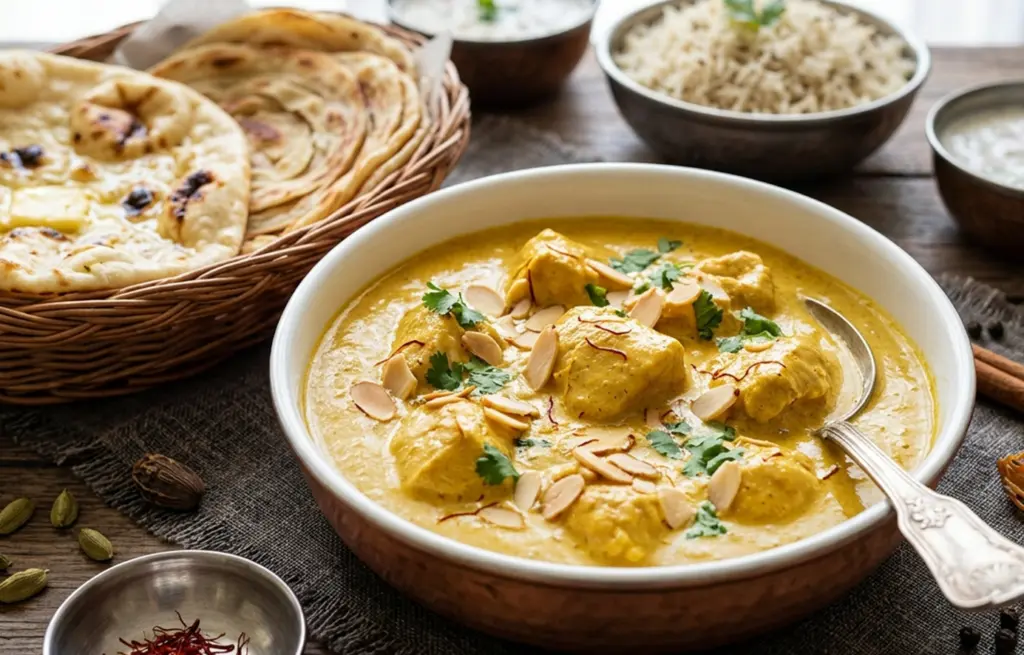
Chicken Pasanda is one of the most refined dishes to come out of the Awadhi culinary tradition of Lucknow. The word pasanda comes from the Urdu and Hindi word pasand, which means liked or favourite, and the dish lives up to its name entirely. It is a mild, rich, creamy curry made with boneless chicken that is marinated in yoghurt and spices, then cooked in a fragrant sauce of golden onions, whole spices, ground almonds and cream. The result is a dish that is deeply satisfying without being heavy, and aromatic without being sharp.
In its most traditional form, pasanda was made with flattened strips of lamb or goat thigh that were beaten thin, marinated and slow-cooked in a spiced yoghurt sauce. The chicken version adapts that same philosophy using boneless breast pieces that are gently flattened or cut thick and cooked in a sauce that is rich with ground almonds, cream and the warmth of cardamom, cinnamon and mace. It is the kind of Lucknowi dish where the flavour comes from balance and gentleness rather than heat.
This recipe uses boneless chicken breast that is marinated briefly before being seared and then finished in the pasanda sauce. Saffron and kewra water are added at the end as a nod to the dish’s Nawabi origins and give it a delicate floral quality that is completely unmistakable. Serve with naan, paratha or steamed basmati rice.
Chicken Pasanda Recipe
Serves: 4
Prep time: 20 minutes (plus 30 minutes soaking)
Cook time: 40 minutes
Total time: Approximately 1 hour 30 minutes
Ingredients
For the Marinade:
- 600g Boneless Chicken Breast, cut into large 5 cm pieces and gently flattened
- 4 tbsp full-fat plain yoghurt, whisked
- 1 tsp ginger-garlic paste
- 1/2 tsp ground turmeric
- 1/2 tsp Kashmiri red chilli powder
- 1/2 tsp ground coriander
- 1/2 tsp garam masala
- 1/2 tsp salt
- 1 tbsp lemon juice
For the pasanda sauce:
- 3 tbsp ghee
- 1 tbsp vegetable oil
- 2 medium onions, finely sliced
- 1 tsp ginger-garlic paste
- 4 green cardamom pods, lightly crushed
- 1 black cardamom
- 1 small cinnamon stick
- 4 cloves
- 1 blade of mace
- 6 black peppercorns
- 1/2 tsp Kashmiri red chilli powder
- 1/2 tsp ground coriander
- 1/4 tsp ground turmeric
- 3 tbsp ground almonds (blanched almond paste)
- 3 tbsp full-fat plain yoghurt, whisked
- 3 tbsp fresh cream
- 1/2 cup water or warm chicken stock
- Salt to taste
For the whole spice tempering:
- 1 tsp cumin seeds
- 2 bay leaves
- 4 green cardamom pods, lightly crushed
- 1 black cardamom
- 4 cloves
- 1 small cinnamon stick
- 6 to 8 black peppercorns
For the Nawabi finish:
- A generous pinch of saffron soaked in 2 tbsp warm milk
- 1/2 tsp kewra water (screwpine water)
- 1/2 tsp rose water (optional)
- 1 tsp ghee
For Garnish:
- 2 tbsp flaked almonds, lightly toasted in a dry pan
- Fresh coriander leaves, chopped
- Naan, paratha or steamed basmati rice (for serving)
Steps
- Place the chicken pieces between two sheets of cling film and gently flatten them to an even thickness of about 1.5 cm using a rolling pin or the base of a heavy pan. This step tenderises the meat and helps it cook evenly and absorb the marinade more effectively. Cut each piece into large chunks if preferred.
- In a large bowl, combine the whisked yoghurt, ginger-garlic paste, turmeric, Kashmiri red chilli powder, ground coriander, garam masala, salt and lemon juice. Add the chicken and coat each piece thoroughly. Cover and refrigerate for at least 30 minutes. One hour gives better results.
- Heat 1 tablespoon of ghee and the vegetable oil together in a large heavy-bottomed pan over medium-high heat. Remove the chicken from the marinade, shaking off the excess but keeping the marinade aside. Sear the chicken pieces for 2 to 3 minutes on each side until lightly golden. Transfer to a plate. The chicken will finish cooking in the sauce.
- In the same pan, add the remaining 2 tablespoons of ghee. Add the sliced onions and cook over medium heat for 10 to 12 minutes, stirring frequently, until they are a soft, deep golden colour. Do not rush this step as properly caramelised onions form the foundation of the pasanda sauce.
- Add the green cardamom, black cardamom, cinnamon stick, cloves, mace and black peppercorns. Sauté for 30 seconds until fragrant.
- Add the ginger-garlic paste and sauté for 1 minute. Then add the Kashmiri red chilli powder, ground coriander and turmeric. Stir well and cook for 1 minute to let the spices bloom.
- Reduce the heat to low. Add the reserved marinade to the pan and stir well. Cook for 2 to 3 minutes, stirring, until the mixture is fragrant and the raw smell of the yoghurt has gone.
- Add the ground almonds to the pan and stir to incorporate. Cook for 1 minute. The almonds will begin to thicken the sauce slightly.
- Add half a cup of warm water or chicken stock. Stir well and bring to a gentle simmer. Return the seared chicken pieces to the pan. Stir to coat them in the sauce. Cover with a lid and cook on low heat for 15 to 18 minutes until the chicken is fully cooked through. The internal temperature should reach 75 degrees Celsius or 165 degrees Fahrenheit.
- Uncover the pan and stir in the fresh cream gently. Simmer uncovered for 3 to 4 minutes to allow the sauce to thicken to a luscious, coating consistency. Taste and adjust the seasoning with salt.
- Drizzle the saffron milk, kewra water and rose water if using over the curry. Stir once gently and finish with a knob of ghee. These final additions are the hallmark of Lucknowi cooking and give the pasanda its characteristic delicate fragrance.
- Transfer to a serving dish and garnish with toasted flaked almonds and fresh coriander. Serve hot with naan, paratha or steamed basmati rice.
Tips for Best Results:
Always use full-fat yoghurt for this recipe. Low-fat yoghurt has a higher water content and will split when added to the hot pan. Full-fat yoghurt gives the sauce a smooth, creamy body without curdling.
Flatten the chicken before marinating. Even if you are cutting the chicken into chunks, pressing it lightly ensures it is an even thickness throughout and cooks uniformly in the sauce.
Add the yoghurt and cream on low heat and stir constantly. Rapid temperature changes cause dairy to split. Adding both on low heat while stirring gently will give you a smooth, silky sauce.
Ground almonds are what give pasanda its characteristic nutty richness and slightly thickened sauce. Do not skip this ingredient. You can make your own by blanching almonds, removing the skins and grinding them to a fine powder.
Kewra water is a distillate of screwpine flowers and it is one of the defining aromas of Awadhi cooking. A small amount added at the end gives the dish a floral, slightly musky quality that is unlike anything else. It is available at most Indian grocery stores.
This curry tastes even better the following day when the flavours have had time to develop and meld. Store in an airtight container in the refrigerator for up to 3 days. Reheat gently on the stovetop over low heat and add a splash of warm water or cream to loosen the sauce.
Chicken Pasanda is a dish that rewards patience and care in equal measure. Every step from the marinade to the almond sauce to the final saffron and kewra finish is deliberate and purposeful. The result is a curry that is mild without being bland, rich without being heavy and fragrant in a way that only Awadhi cooking can be. Once you have made it you will understand why it has earned the name favourite.
Order Zorabian’s Boneless Chicken Breast from shop.zorabian.com and try this recipe at home.