

Blogs
How to Make Lucknowi Chicken Yakhni Pulao at Home
Lucknowi Chicken Yakhni Pulao is one of the finest examples of Awadhi cooking. It is a dish of extraordinary restraint where bone-in chicken is first simmered with whole spices and aromatics to create a deeply flavoured broth called yakhni. That broth is then used to cook long-grain basmati rice, so every grain absorbs the essence of the spices and the chicken from the inside out. The result is a pulao that is fragrant, delicate and layered with flavour without being heavy or overpowering.
The word yakhni comes from Persian and means broth or stock. In Lucknowi cooking, making a proper yakhni is considered the foundation of a good pulao. The broth is built slowly with whole spices like shahi jeera, black cardamom, green cardamom, mace, fennel seeds and bay leaves, which give it a complexity and depth that no ground spice can replicate. This is the hallmark of Awadhi cuisine and what separates a Lucknowi pulao from any other.
This recipe uses bone-in chicken pieces that are simmered to build the yakhni, then returned to the pot to cook with the soaked basmati rice. The pulao is finished with caramelised onions and a knob of ghee for richness. Serve it with a simple cucumber raita or mint chutney for the complete Lucknowi experience.
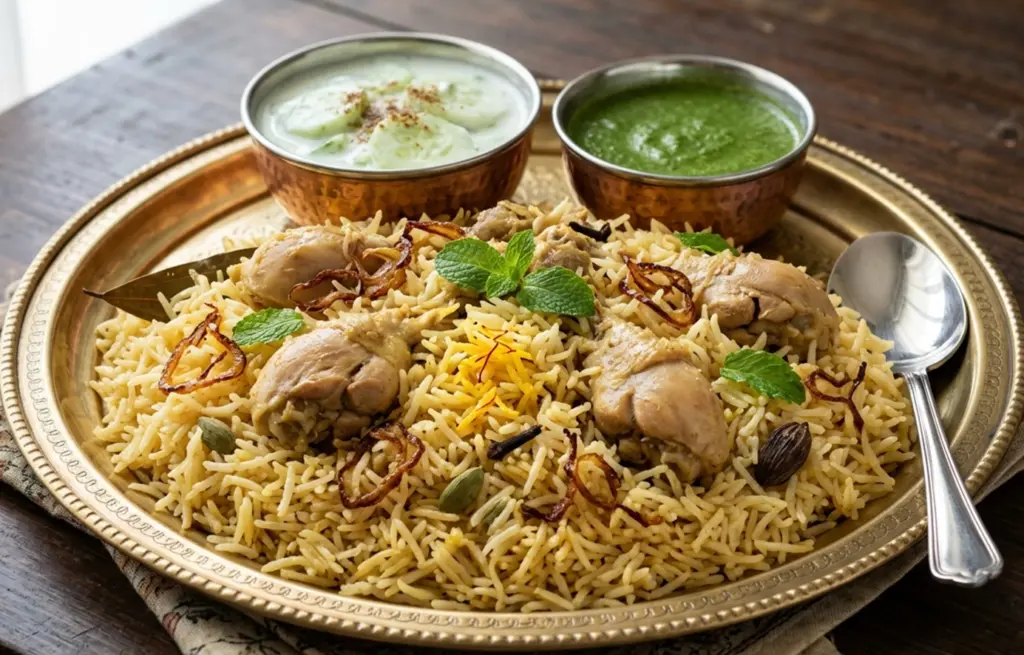
Lucknowi Chicken Yakhni Pulao Recipe
Serves: 4
Prep time: 20 minutes (plus 30 minutes soaking)
Cook time: 55 minutes
Total time: Approximately 1 hour 45 minutes
Ingredients
For the Yakhni (broth):
- 800g Chicken Curry Cut (bone-in pieces)
- 5 litres water
- 1 medium onion, halved (skin on)
- 1 small piece fresh ginger (about 2 cm)
- 4 cloves garlic
- 2 bay leaves
- 1 tsp shahi jeera (black cumin seeds)
- 1 tsp fennel seeds
- 1 black cardamom
- 4 green cardamom pods, lightly crushed
- 4 cloves
- 1 small cinnamon stick
- 1 blade of mace
- 8 to 10 black peppercorns
- 1 tsp salt
For the Pulao:
- 2 cups long-grain basmati rice, washed and soaked for 30 minutes
- 3 tbsp ghee
- 1 tbsp vegetable oil
- 2 large onions, thinly sliced
- 1 tsp shahi jeera
- 2 bay leaves
- 2 green cardamom pods
- 1 small cinnamon stick
- 2 cloves
- 1 tbsp ginger-garlic paste
- 2 green chillies, slit lengthwise
- 1/2 cup plain yoghurt, whisked
- Salt to taste
- A generous pinch of saffron soaked in 2 tbsp warm milk (optional)
For Garnish:
- 2 tbsp fried onions (birista)
- Fresh mint leaves
- Cucumber raita or mint chutney (for serving)
Steps
- Wash the basmati rice thoroughly under cold water until the water runs clear. Soak it in cold water for 30 minutes. Drain and set aside. Soaking is essential as it allows the grains to cook evenly and stay separate rather than becoming clumped or mushy.
- Make the yakhni. Place the chicken pieces in a large pot with 1.5 litres of water. Add the halved onion with skin on, the ginger, garlic, bay leaves, shahi jeera, fennel seeds, black cardamom, green cardamom, cloves, cinnamon, mace, black peppercorns and salt. Bring to a boil over high heat, skimming off any foam that rises to the surface. Reduce the heat to medium-low and simmer gently for 25 to 30 minutes until the chicken is just cooked through and the broth is fragrant and deeply flavoured. The onion skin will give the yakhni a beautiful golden colour.
- Remove the chicken pieces from the yakhni using a slotted spoon and set them aside. Strain the broth through a fine mesh strainer and discard the whole spices and onion. Measure out 3 cups of the strained yakhni and set it aside. The remaining broth can be saved for soup or discarded.
- In a large heavy-bottomed pot or handi, heat the ghee and vegetable oil together over medium heat. Add the thinly sliced onions and cook, stirring frequently, for 12 to 15 minutes until they are deep golden brown and caramelised. This step is crucial and should not be rushed. Reserve about one third of the fried onions for garnish.
- Add the shahi jeera, bay leaves, green cardamom, cinnamon and cloves to the pot with the remaining fried onions. Sauté for 30 seconds until fragrant.
- Add the ginger-garlic paste and slit green chillies. Sauté for 1 to 2 minutes until the raw smell disappears.
- Reduce the heat to low. Add the whisked yoghurt to the pot slowly, stirring constantly to prevent it from curdling. Cook for 2 to 3 minutes, stirring, until the yoghurt is fully incorporated and the oil begins to separate slightly.
- Return the cooked chicken pieces to the pot and stir gently to coat them with the masala. Cook for 2 minutes.
- Pour in the 3 cups of reserved yakhni. Taste and adjust the salt. Bring to a gentle boil.
- Drain the soaked basmati rice and add it to the pot. Stir gently once to distribute the rice evenly around the chicken. Bring to a boil over high heat, then reduce the heat to low. Cover the pot with a tight-fitting lid and cook for 15 to 18 minutes until the rice is fully cooked and all the yakhni has been absorbed.
- If using saffron, drizzle the saffron milk over the top of the rice in the last 5 minutes of cooking. Do not stir — simply close the lid and let it steam into the rice.
- Turn off the heat. Leave the pot covered and undisturbed for 10 minutes to allow the rice to finish steaming and the grains to firm up. This resting step ensures the rice stays separate and fluffy.
- Gently fluff the pulao with a fork. Transfer to a serving dish and garnish with the reserved fried onions and fresh mint leaves. Serve hot with cucumber raita or mint chutney.
Tips for Best Results:
Keep the onion skin on while making the yakhni. The skin adds a natural golden colour to the broth without any artificial colouring. This is a classic Lucknowi technique that makes a visible difference.
Skim the foam as the yakhni simmers. The foam that rises in the first few minutes of boiling is impurities from the chicken. Removing it gives you a cleaner, clearer broth and a purer flavour.
Do not rush the caramelising of the onions. Deep golden brown onions are the backbone of the pulao’s flavour and colour. Pale onions will make the pulao taste flat. Allow 12 to 15 minutes on medium heat and stir frequently.
Always soak the basmati rice for at least 30 minutes before cooking. This reduces the cooking time and ensures the grains cook evenly and stay long and separate rather than breaking.
Use long-grain aged basmati rice for the best results. Aged basmati has lower moisture content and produces fluffier, more separated grains.
Rest the pulao for 10 minutes after the heat is turned off before opening the lid. This is the dum step and it is non-negotiable for a proper Awadhi pulao. Opening the lid early releases steam and results in unevenly cooked rice.
Serve with a cool cucumber raita. The freshness and lightness of raita balances the richness of the pulao perfectly and is the traditional accompaniment in Lucknowi cooking.
Lucknowi Chicken Yakhni Pulao is a dish that rewards the time you give it. The yakhni is what makes it special and the process of building that broth with whole spices is what separates this pulao from a quick weeknight rice dish. Once you have made it, you will understand why it has held a place at Awadhi tables for centuries.
Order Zorabian’s Chicken Curry Cut from shop.zorabian.com and try this recipe at home.