


Blogs
How to Make the Perfect Herb Butter Roast Chicken at Home
A well-roasted chicken is one of the most satisfying things you can make at home. The skin turns golden and crisp, the meat stays juicy and tender, and the kitchen fills with the kind of aroma that brings everyone to the table before you have even called them. This recipe uses a herb butter that is rubbed generously under and over the skin, which bastes the chicken from the inside as it roasts and gives it a richness and depth of flavour that a simple seasoning rub cannot match.
The herb butter itself is straightforward to make. Softened butter is mixed with garlic, fresh herbs, lemon zest and a little black pepper, then worked under the skin and across the surface of the chicken before it goes into the oven. The result is a roast that is deeply flavoured all the way through, with skin that stays crisp and meat that does not dry out.
This is a recipe that works equally well for a relaxed Sunday lunch or a special occasion dinner. It requires no complex techniques, just good ingredients, a little patience and a hot oven.
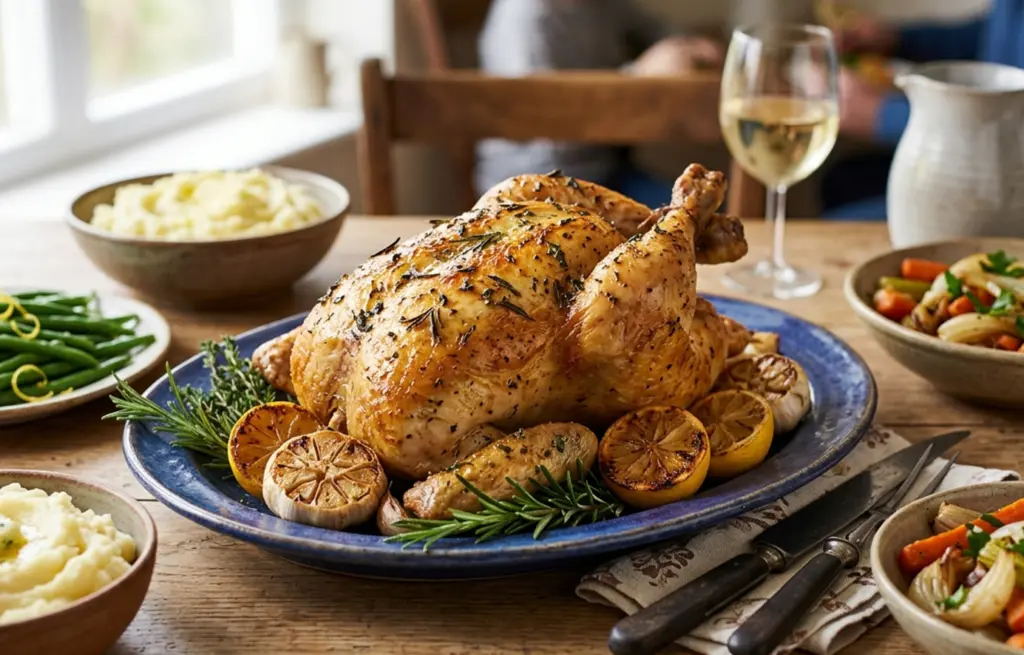
Herb Butter Roast Chicken Recipe
Serves: 4
Prep time: 20 minutes (plus 30 minutes resting at room temperature)
Cook time: 1 hour 20 minutes to 1 hour 30 minutes
Total time: approximately 2 hours 20 minutes
Ingredients
For the chicken:
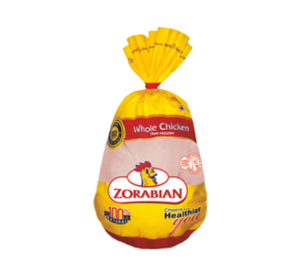
- 1 Whole Chicken
- 1 tsp salt
- 1/2 tsp black pepper
- 1 lemon, halved
- 1 whole head of garlic, halved crosswise
- A few sprigs of fresh rosemary or thyme (for the cavity)
For the herb butter:
- 80g unsalted butter, softened to room temperature
- 4 cloves garlic, finely minced
- 2 tbsp fresh rosemary leaves, finely chopped
- 2 tbsp fresh thyme leaves
- 2 tbsp fresh flat-leaf parsley, finely chopped
- Zest of 1 lemon
- 1/2 tsp black pepper
- 1/2 tsp salt
For roasting:
- 1 tbsp olive oil
- 1 medium onion, roughly chopped
- 2 medium carrots, roughly chopped
- 2 sticks celery, roughly chopped
- 1/2 cup chicken stock or water (for the roasting pan)
Steps
- Remove the chicken from the refrigerator 30 minutes before cooking and leave it to rest at room temperature. This is an important step as a cold chicken placed directly into a hot oven will cook unevenly, leaving the breast meat dry before the thighs are fully cooked through.
- Preheat your oven to 200 degrees Celsius or 400 degrees Fahrenheit. If you have a fan-assisted oven, set it to 180 degrees Celsius.
- Make the herb butter. In a small bowl, combine the softened butter, minced garlic, chopped rosemary, thyme, parsley, lemon zest, salt and black pepper. Mix everything together thoroughly until you have a smooth, well-combined herb butter. Taste it and adjust the seasoning if needed. The butter should be well-seasoned as it will flavour the entire chicken.
- Pat the chicken completely dry with paper towels, inside and out. Removing surface moisture is what allows the skin to crisp up properly in the oven. Any moisture left on the skin will cause it to steam rather than roast, resulting in soft skin rather than a golden, crisp finish.
- Season the cavity of the chicken generously with salt and black pepper. Place the halved lemon, the halved head of garlic and the fresh herb sprigs inside the cavity. These aromatics will perfume the meat gently from the inside as it roasts.
- Starting at the neck end of the chicken, gently slide your fingers under the skin of the breast, being careful not to tear it. Work your way carefully to create a pocket between the skin and the breast meat on both sides. Take about two thirds of the herb butter and push it under the skin, spreading it as evenly as possible over both breasts. This direct contact between the butter and the meat is what keeps the breast moist and well-flavoured throughout roasting.
- Rub the remaining herb butter all over the outside of the chicken, covering the legs, thighs and wings as well as the breast. Drizzle the olive oil over the top and rub it in lightly.
- Scatter the roughly chopped onion, carrot and celery across the base of a roasting tin. These vegetables will support the chicken and prevent it from sitting in its own juices. Place the chicken breast-side up on top of the vegetables. Pour the chicken stock or water into the base of the tin.
- Place the roasting tin in the preheated oven. Roast for 1 hour 20 minutes to 1 hour 30 minutes for a 1.5 kg chicken. After the first 45 minutes, baste the chicken by spooning the pan juices over the top. This helps develop an even golden colour and keeps the skin from drying out.
- The chicken is done when the juices run clear when you pierce the thickest part of the thigh with a skewer or sharp knife. If you have a meat thermometer, the internal temperature at the thickest part of the thigh (without touching the bone) should read 75 degrees Celsius or 165 degrees Fahrenheit. If the skin is browning too quickly before the chicken is cooked through, cover it loosely with aluminium foil.
- Once the chicken is cooked, remove it from the oven and transfer it to a carving board. Tent it loosely with foil and leave it to rest for at least 15 minutes before carving. Resting allows the juices to redistribute throughout the bird, which is what keeps every slice moist and tender.
- Carve the chicken and serve with your choice of sides. Roasted vegetables, mashed potatoes, steamed greens or a simple salad all work beautifully alongside herb butter roast chicken.
Tips for Best Results:
- Use butter that is genuinely soft before making the herb butter. Cold butter will not mix smoothly with the herbs and garlic, and it will be very difficult to spread under the skin without tearing it. If you have forgotten to take the butter out in advance, cut it into small pieces and leave it for 15 to 20 minutes.
- Fresh herbs make a real difference in this recipe. Dried herbs can be used in a pinch, but fresh rosemary, thyme and parsley give the butter a brighter, more vibrant flavour. If substituting with dried herbs, use about one third of the quantity.
- Do not skip drying the chicken thoroughly before applying the butter. This single step has the biggest impact on whether the skin turns genuinely crisp. Use paper towels and pat until no surface moisture remains.
- The vegetables in the base of the roasting tin serve two purposes. They elevate the chicken so hot air can circulate underneath it, and they absorb the roasting juices which makes them wonderful to eat alongside the carved chicken.
- Resting the chicken before carving is essential for juicy meat. Carving it immediately will cause all the juices to run out onto the board. Fifteen minutes of resting makes a significant and noticeable difference to the final result.
- To make a simple pan sauce, place the roasting tin directly on the hob over medium heat after removing the chicken. Add a splash of white wine or extra chicken stock and stir to lift all the caramelised bits from the base. Strain and serve alongside the chicken.
- Leftover roast chicken keeps well in an airtight container in the refrigerator for up to 3 days. It is delicious in sandwiches, salads, pasta or a simple soup made with the carcass.
Herb butter roast chicken is a recipe worth returning to again and again. The method is simple, the ingredients are easy to find, and the result is a bird that is golden and crisp on the outside and deeply flavourful all the way through. Once you have made it a few times it becomes second nature, and it is the kind of roast that never fails to bring people back for seconds.
Order Whole Chicken from shop.zorabian.com and try this recipe at home.